

Work Slip and Fall Injury in California? When You Can Sue the Building Owner (And When You Can’t)
 0
0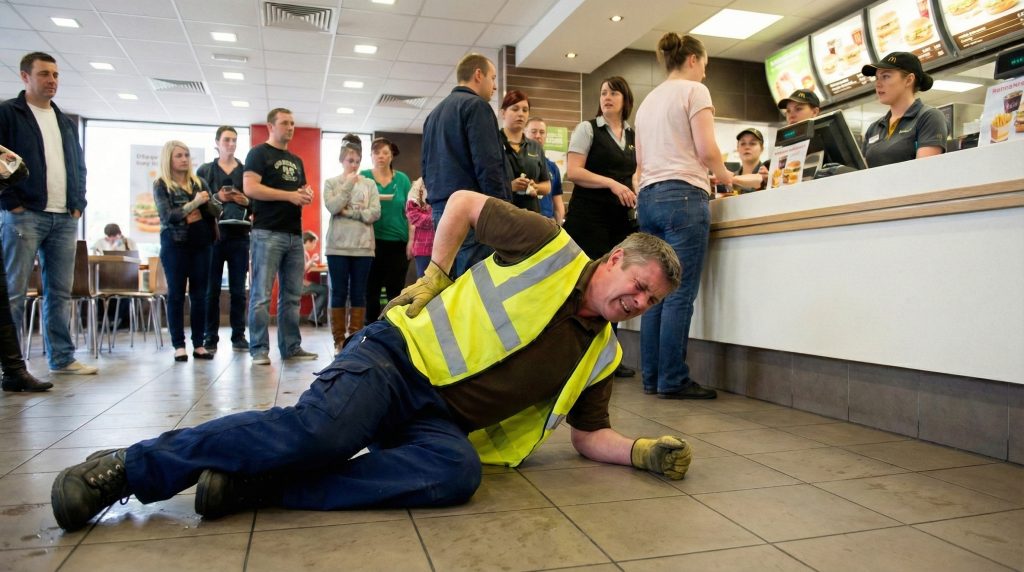
If you slipped and fell while working in California, you’re probably hearing two different messages at once:
“It’s a workers’ comp claim.”
“Maybe you can sue.”
Both can be true—depending on who caused the hazard and who controlled the property.
This guide explains (in plain English) when you can sue a building owner, landlord, or property manager after a work slip-and-fall—and when you usually can’t. It’s written for real-world California scenarios, including common Los Angeles work settings like client offices, apartment complexes, parking structures, restaurants, and construction sites.
Quick Answer: In California, you usually can’t sue your employer for a slip and fall at work because workers’ comp is typically the main remedy. But you may be able to sue a third party—like a building owner, landlord, property manager, or outside contractor—if their negligence created or allowed the dangerous condition that caused your fall. The key is who controlled the area and whether there’s proof of negligence and notice.
What “At Work” Changes in California
A work injury often triggers workers’ compensation, which can cover:
Medical treatment
A portion of lost wages (temporary disability)
Disability benefits (in some cases)
California DIR — Injured Worker Guidebook (Workers’ Comp basics)
But workers’ comp generally does not pay for many of the things people care most about—like pain and suffering.
That’s where a third-party claim may come in.
The simple rule:
Workers’ comp = usually against your employer (no need to prove fault).
Third-party lawsuit = against someone other than your employer (you must prove negligence).
When You CAN Sue the Building Owner After a Work Slip and Fall
Here are the most common situations where a third-party lawsuit is possible in California.
1) You were working on property your employer does NOT own or control
This is the classic “third-party” setup, such as:
You’re at a client’s office
You’re working inside a shopping center or commercial building
You’re servicing equipment in an apartment complex
You’re delivering to a hotel, restaurant, store, or business
You’re at a construction site controlled by other entities
2) The hazard relates to the property’s condition or maintenance
Examples that frequently support a claim:
Wet lobby floors with poor warning/cleanup procedures
Leaks (roof, HVAC, refrigeration, plumbing) creating recurring slippery areas
Broken steps, uneven flooring, torn carpet, loose tiles
Missing or unstable handrails
Poor lighting in stairwells or parking structures
Slick surfaces with no traction measures in high-traffic zones
3) A third-party vendor created the hazard
A building owner may be liable—or a vendor may be directly liable—when the condition was caused by:
Cleaning/janitorial company
Maintenance vendor
Construction contractor/subcontractor
Landscaping crew
Equipment installer or service company
4) The fall happened in a common area
Common areas are a big deal in third-party cases because they’re often controlled by a landlord/property manager:
Lobbies
Hallways
Elevators
Stairwells
Parking garages
Walkways and entryways
When You Usually CAN’T Sue the Building Owner (Common “No” Scenarios)
These are the situations that most often block a third-party building owner case—or make it much harder.
1) The “building owner” is actually your employer
If your employer owns/controls the building area where you fell, your claim may be limited to workers’ comp (with narrow exceptions).
2) The evidence doesn’t show negligence
A fall alone isn’t enough. If there’s no proof of an unreasonably dangerous condition, insurers often argue it was just an accident.
3) You can’t show “notice”
Even if there was a hazard, the defense often becomes:
“We didn’t know about it, and we couldn’t reasonably have discovered it in time.”
Your case gets stronger when you can show the hazard existed long enough—or happened repeatedly—so it should have been discovered and fixed.
4) The hazard was open and obvious (or you’re accused of ignoring it)
This doesn’t automatically end a claim, but it can reduce value or increase comparative fault arguments—especially if there’s video showing you saw it.
5) You’re really dealing with a workers’ comp-only situation
Some cases are legitimately workers’ comp-only because no third party contributed and the employer controlled the condition.
Who Counts as the “Building Owner” in Real Life?
In many cases, you’re not suing an individual person—you’re dealing with multiple responsible parties, such as:
The property owner (the landlord)
The property manager (manages maintenance and safety)
The tenant/business (controls their suite or store area)
The HOA (in some shared residential settings)
Vendors/contractors who created or failed to fix the hazard
A good third-party case often starts by identifying: Who controlled that exact area at that exact time?
What You Must Prove to Sue a Building Owner (Premises Liability Basics)
To win a third-party premises liability case, you generally need proof of:
1) A dangerous condition existed
For example: liquid/grease, broken flooring, uneven steps, poor lighting, missing handrail.
2) The owner/manager was negligent
Meaning they didn’t use reasonable care to keep the area safe.
3) Notice: they knew or should have known
This is the core battle in most slip-and-fall cases. You can show notice through:
Video showing the hazard existed for a while
Prior complaints or repeated leaks/spills
Lack of inspection/cleaning routines
Maintenance logs that reveal ongoing issues
4) Causation and damages
You must connect the hazard to the fall and show real losses: medical care, missed work, ongoing limitations, etc.
California Courts — Personal injury cases
Evidence That Makes Third-Party Work Slip Cases Strong (Save This Checklist)
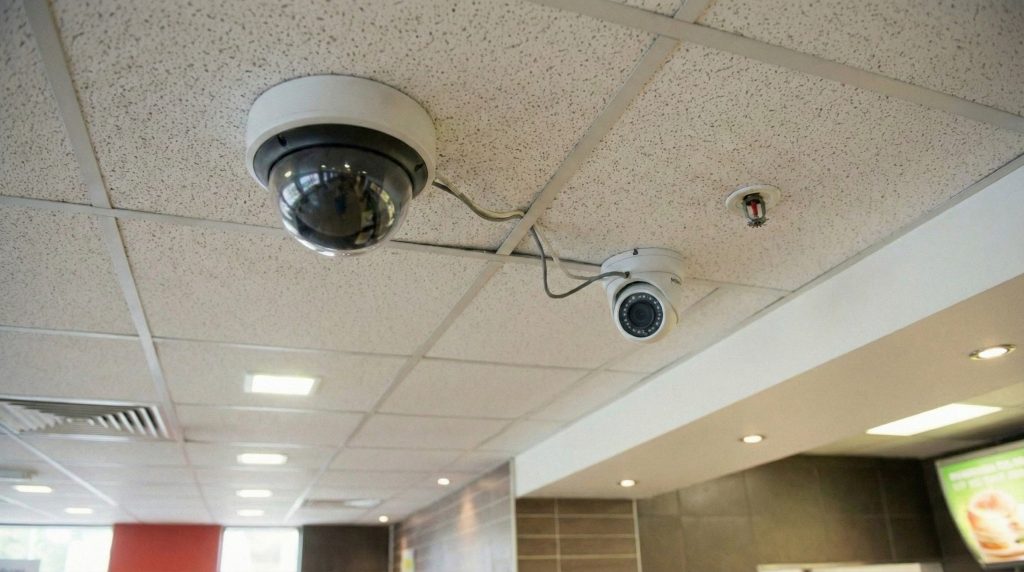
Evidence disappears quickly—especially video.
The “12-item” evidence checklist
Photos/video of the hazard (wide and close-up)
Photos showing lighting, signage, and the surrounding walkway
The exact location (include landmarks/doorways)
Witness names and contact info
Manager/security names (who you reported to)
Any incident report (or note if they refused)
Your shoes and clothing preserved (don’t wash/throw away)
Medical visit documentation (as soon as possible)
Work status note (restrictions, time off)
A written timeline of symptoms (first 7 days matters)
Any messages/emails to supervisors about the incident
Notes about prior hazards (leaks, recurring spills, known broken steps)
OSHA — Walking-working surfaces (hazard-free requirement)
Video tip
If there are cameras, time is critical. Many systems overwrite footage on a schedule. Identifying cameras early can be the difference between “he said/she said” and a clear liability picture.
What to Do in the First 24 Hours After a Work Slip and Fall
Do this
Get medical care (even if symptoms feel mild at first)
Report it to your employer per policy
Report it to the property manager/security if you’re at a client site
Photograph the hazard and the area
Get witness info
Preserve shoes/clothing
Write a short timeline while it’s fresh
Don’t do this
Don’t give a recorded statement to an insurer right away
Don’t guess details you’re unsure of
Don’t downplay injuries (“I’m fine”) if you’re not sure
Don’t sign settlement paperwork early
Two short scripts
To a property manager: “I was injured due to a hazardous condition. I need the incident documented and I’m requesting that any video footage be preserved.”
To an adjuster: “I’m still getting medical care and I’m not providing a recorded statement right now.”
Deadlines That Matter in California
There are two separate “clocks” you should care about:
1) The legal deadline clock
California has time limits for filing a lawsuit in personal injury matters, and special rules can apply depending on the defendant and facts.
California Courts — Deadlines to sue (statute of limitations)
2) The evidence clock
Video, cleaning logs, and witness memory can fade quickly—sometimes within days or weeks.
Public property warning
If your fall happened on property connected to a government agency (certain sidewalks, public buildings, public venues), special notice requirements and shorter timelines may apply.
California Courts — Government claim deadlines and steps
Los Angeles Work Scenarios That Commonly Become Third-Party Cases
Slip and fall at a client’s office (Downtown LA, West LA, etc.)
Possible third parties: building owner, property manager, tenant business, janitorial vendor.
Best evidence: lobby/hallway video, cleaning logs, witness statements.
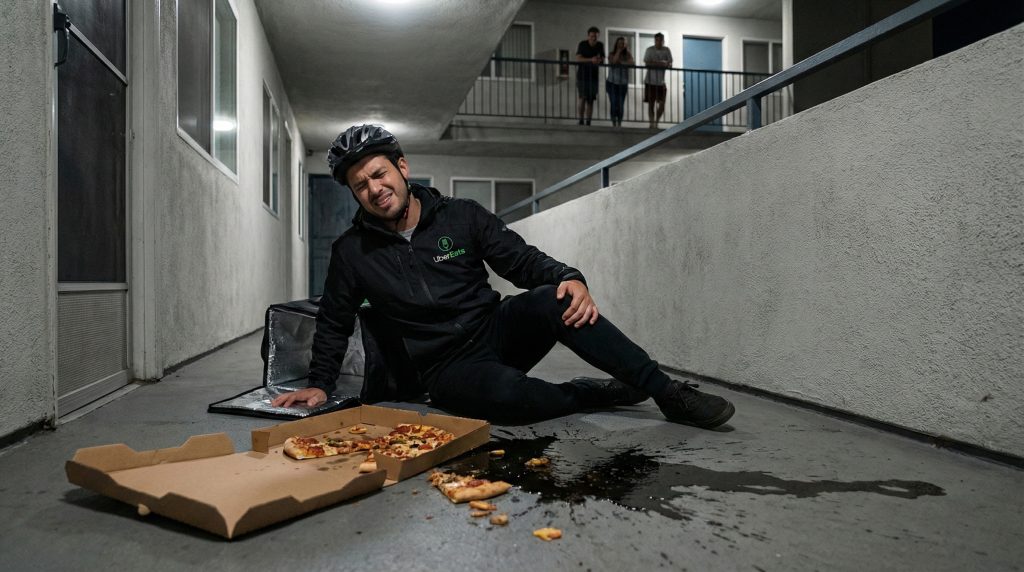
Delivery driver slip and fall at an apartment complex
Possible third parties: landlord, HOA, management company, maintenance vendor.
Best evidence: entryway photos, stairwell/parking garage lighting, prior complaints.
Construction job site slip
Possible third parties: property owner, general contractor, subcontractor, site safety vendor.
Best evidence: jobsite photos, hazard source (debris/liquid), safety meeting logs, who controlled the area.
Parking garage and stairwell falls
Possible third parties: property manager, security vendor, maintenance company.
Best evidence: lighting photos, broken step/handrail documentation, inspection records.
FAQs
Can I sue a building owner if I already filed workers’ comp?
Often, yes—if a third party (like a building owner or contractor) contributed to the hazard. Workers’ comp and third-party claims can sometimes run alongside each other.
What if I was partly at fault?
You may still have a claim. Fault arguments can reduce recovery, but they don’t always eliminate it.
What if there was a warning sign?
A sign doesn’t automatically end liability. The question is whether the warning was adequate and whether the area was still unreasonably dangerous.
What if I didn’t go to the ER that day?
Many injuries worsen later. Delayed ER care doesn’t automatically defeat a claim—what matters is timely evaluation and consistent documentation.
How long do these cases take?
Some resolve in months; others take longer when liability is disputed or treatment is ongoing.
What makes a third-party work slip case “strong”?
Clear proof of the hazard, proof of notice (knew/should have known), consistent medical documentation, and well-documented wage loss and daily-life impact.
How Khorshidi Law Firm Can Help
Third-party slip-and-fall work cases are won with fast evidence preservation and clear liability proof—especially video, incident documentation, and “notice” evidence. If you were injured while working in Los Angeles or anywhere in Southern California, Khorshidi Law Firm can evaluate whether your case may involve a third party (building owner, property manager, contractor, or vendor) and what steps should happen next.
This article is for informational purposes only and does not constitute legal advice. Every case depends on specific facts.
Khorshidi Law Firm, APC
8822 W. Olympic Blvd, Beverly Hills, CA 90211
(310) 273-2211
contact@khorshidilaw.com


















 click to calL, it’s free


