

How Much Can I Get Paid for Slipping and Falling at a Restaurant? (California Guide) | Khorshidi Law Firm
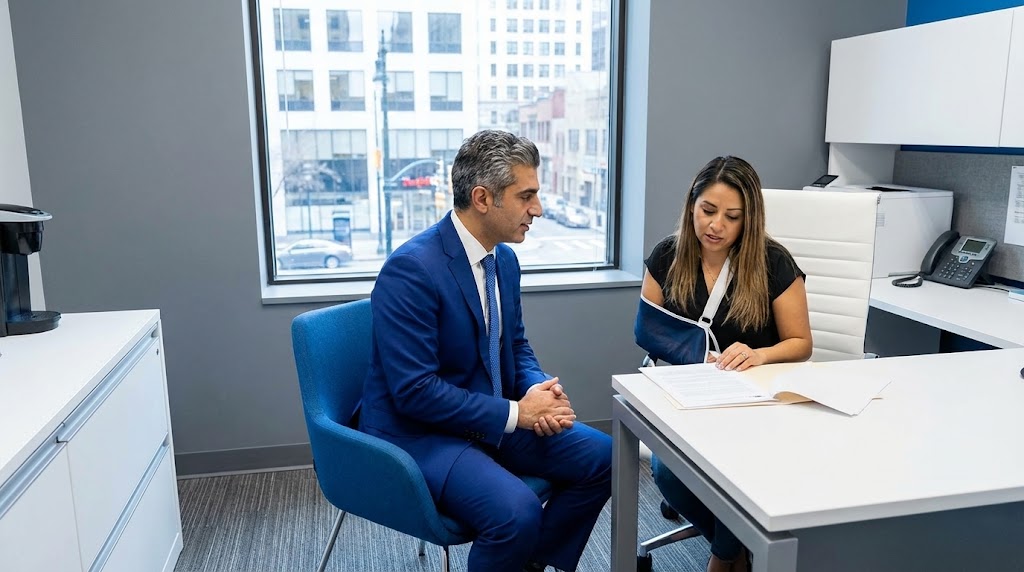
If you’re searching “how much can I get paid for slipping and falling at a restaurant,” you’re really asking two things:
Is the restaurant legally responsible?
If yes, what could my claim be worth in California?
There isn’t one number that fits every case. Restaurant slip-and-fall payouts depend on how strong liability is, how serious the injuries are, and how well everything is documented. This guide breaks down exactly what drives settlement value—and what you can do right now to protect your claim.
Quick Answer: In California, the amount you can get paid for slipping and falling at a restaurant depends on proof the restaurant was negligent, injury severity, medical documentation, time missed from work, and how the injury affects daily life. Many cases resolve in the thousands to tens of thousands, while falls involving fractures, surgery, head injuries, or long-term disability can reach six figures or more. Every case turns on the facts.
What “Getting Paid” Really Means (Gross vs. Net)
When people say “How much will I get paid?” they usually mean their take-home amount. But your claim value can include multiple pieces:
Medical bills (past and future)
Lost wages (and reduced earning ability if you can’t do the same work)
Pain, limitations, and life impact
Out-of-pocket costs (meds, braces, transportation, help at home)
Two important notes:
A settlement amount is not always what you net. Medical bills, health insurance reimbursement, liens, case costs, and fees can affect the final distribution.
You usually shouldn’t settle until your medical picture is clear. Early offers often ignore future care, ongoing pain, or missed work.
The 6 Biggest Factors That Decide Restaurant Slip-and-Fall Payouts
1) How serious your injuries are (and how long they last)
A short-lived strain is valued differently than:
Fractures
Knee/hip/shoulder tears
Back/neck injuries with ongoing symptoms
Concussions or head injuries
Injuries requiring injections or surgery
2) Medical documentation (consistency matters more than people realize)
Insurance companies focus on:
How quickly you sought care
Whether your symptoms are consistently reported
Whether treatment gaps exist
Whether doctors connect your injury to the fall
3) Lost wages and job impact
If you missed work or can’t perform the same duties, that can substantially change value—especially with clear employer documentation.
4) Pain, limitations, and daily-life disruption
Your case value can increase if the injury affects:
Sleep
Walking/stairs
Driving
Lifting
Parenting/caregiving
Fitness routines and normal activities
5) Liability strength (can you prove the restaurant was negligent?)
This is the make-or-break factor. A restaurant may be liable when there’s proof it failed to:
Inspect and clean regularly
Fix a known hazard
Warn customers effectively
Maintain safe flooring/entryways
6) Comparative fault arguments
Restaurants and insurers often argue the customer caused or contributed to the fall (distraction, footwear, intoxication, ignoring a sign). Even if they argue partial fault, you may still recover—but it can reduce the amount.
Restaurant-Specific Liability in California (What You Must Prove)
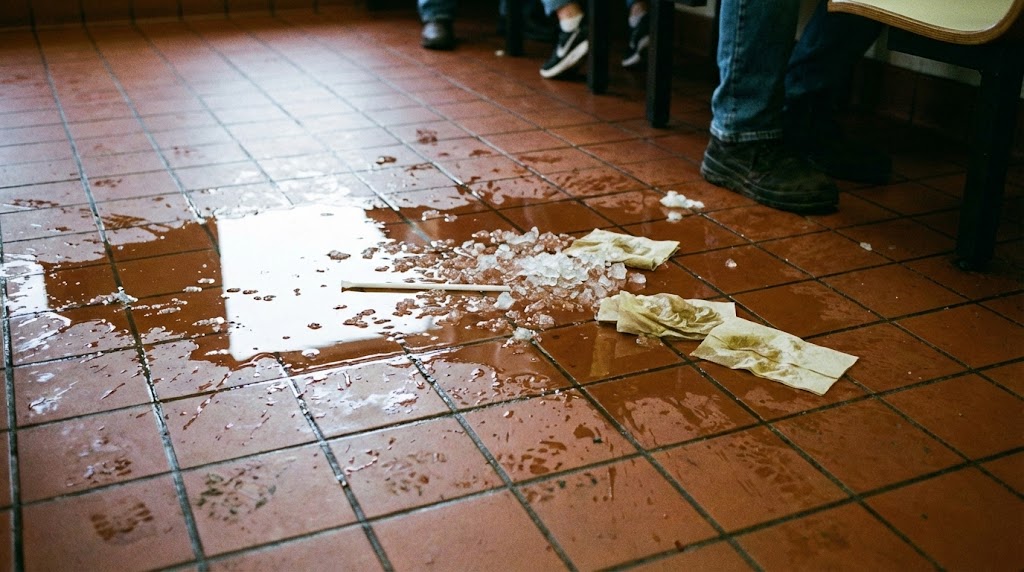
A restaurant slip-and-fall is usually a premises liability claim. In plain English, you generally need to show:
A dangerous condition existed (spill, greasy floor, leaking ice machine, slick entryway, uneven tile, poor lighting)
The restaurant knew or should have known about it (actual or constructive notice)
The restaurant failed to fix it or warn appropriately
That failure caused your fall
You suffered damages (medical costs, missed work, pain and limitations)
Restaurant reality: Spills and hazards happen—but the key question is whether the restaurant had reasonable systems to detect and address them.
Evidence That Increases a Restaurant Slip-and-Fall Settlement
The “notice” proof (knew or should have known)
This is the evidence that often drives value:
Surveillance video showing how long a spill was there
Cleaning/inspection schedules
Employee statements or admissions
Prior complaints about the same hazard
Photos showing no reasonable warning or cleanup
The “fast-disappearing” proof
Restaurants clean up quickly and video can be overwritten. The earlier you act, the better:
Identify cameras (ceiling corners, bar area, entrances, registers)
Report the incident immediately and get the manager’s name
Ask for an incident report (or document who refused)
Get witness contact info before people leave
10-Point Evidence Checklist (Save This)
Photos/video of the hazard (wide + close-up)
Photos showing lighting and lack of warnings
Your shoes and clothing preserved (don’t clean or throw away)
Receipt showing you were there
Manager name + employee names (if available)
Time, location, and what you slipped on
Witness names/phone numbers
Any incident report details
Medical visit documentation as soon as possible
A written timeline of symptoms (day-by-day for the first week)
What to Do After Slipping and Falling at a Restaurant
Do this (as soon as you can)
Get medical care (even if symptoms feel “mild”)
Report it to a manager and request documentation
Photograph the hazard and surrounding area
Get witness contact info
Write down what happened while it’s fresh
Preserve shoes/clothing
If you feel head/neck symptoms, get evaluated promptly
Avoid these common mistakes
Don’t give a recorded statement right away
Don’t guess about details you’re unsure of
Don’t post about the incident or your injuries on social media
Don’t accept a quick settlement before you understand your injury
Safe script if an insurance adjuster calls
“I’m still getting medical care and I’m not giving a recorded statement. I’ll respond after I’ve gotten advice.”
Deadlines in California (Don’t Wait Until Evidence Is Gone)
Two time pressures matter in restaurant falls:
Legal deadlines to file a claim/lawsuit
Evidence deadlines (video retention, cleaning logs, witness memory)
Also, if the restaurant is inside or connected to a government-owned property (certain venues, facilities, or publicly managed locations), different claim rules and faster timelines may apply. When in doubt, treat it as urgent.
Realistic Value Ranges Without Hype (What People Often See)

These are general patterns, not promises. Your case could be lower or higher depending on proof, injuries, and documentation:
Minor injuries (short treatment, minimal time off)
Often resolves in the low thousands to low tens of thousands, especially when medical care is limited and recovery is quick.
Moderate injuries (extended therapy, significant pain, missed work)
Commonly resolves in the tens of thousands when treatment is consistent and liability is strong.
Serious injuries (fractures, head injuries, injections, surgery, long-term limits)
Can reach six figures or more, particularly when future medical care and long-term impact are well documented.
Key point: A restaurant fall isn’t valued by the fall itself—it’s valued by proof + injury impact + documented losses.
Why Trial-Ready Preparation Can Increase Settlement Leverage
Insurance companies assess risk. When a claim is built with:
clear liability evidence (especially “notice” proof),
consistent medical documentation,
well-supported wage loss and future care,
…the insurer often treats it differently than a case with missing evidence and vague records. Trial-ready preparation signals the case is not being handled casually.
How Khorshidi Law Firm Can Help
If you slipped and fell at a restaurant in Los Angeles or Southern California and you’re asking how much you can get paid, a case review helps you understand:
Whether the restaurant may be liable
What evidence should be preserved immediately
What damages should be included (now and future)
How to avoid insurance tactics that reduce value
Khorshidi Law Firm, APC
8822 W. Olympic Blvd, Beverly Hills, CA 90211
Phone: (310) 273-2211
Ask for a free consultation with trial attorney Omid Khorshidi.
This article is for informational purposes only and does not constitute legal advice. Every case is different.
FAQs
How much can I get paid for slipping and falling at a restaurant?
It depends on liability proof, injury severity, medical documentation, missed work, and long-term impact. Many claims resolve in the thousands to tens of thousands; severe injuries can be much higher.
What if there was a wet floor sign?
A sign doesn’t automatically end a claim. The question is whether the warning was adequate and whether the area was still unreasonably dangerous.
What if I didn’t go to the ER the same day?
You may still have a case. Many injuries worsen later. Getting medical evaluation soon and documenting symptoms is important.
What if the restaurant says it’s my fault?
They may argue comparative fault. You can still recover, but your compensation could be reduced depending on the facts.
How long does a restaurant slip-and-fall claim take?
Some resolve in months; others take longer if liability is disputed or treatment is ongoing. It’s often smarter to understand your medical outlook before settling.







Awards and Ratings
- Winner of Litigator Award 2014 Personal Injury Trial Lawyer

- Winner of Litigator Award 2015 Ranked Top 1% of Lawyers

 Best Attorneys of America, Lifetime Charter Member
 Million Dollar Advocates Forum, Lifetime Charter Member
 Avvo Superb Rating. Top Personal Injury Attorney




Get a top attorney you can trust. One who really cares about you.Who will win for you.
 click to calL, it’s free
Omid Khorshidi is one of the best personal injury attorneys in California. Based in Beverly Hills, Omid has been practicing for 15 years with a 99.99% success rate in many different types of cases, including car accidents, spinal injuries, slip and falls, motorcycle accidents and many more. Get what you deserve, contact us now.
Stay Up To Date with the Law
- Stay in touch:


 8822 W. Olympic Blvd
, Beverly Hills, CA 90211
8822 W. Olympic Blvd
, Beverly Hills, CA 90211 Toll Free: (310) 273-2211
DISCLAIMER: Nothing within our website should be construed as legal advice. Every case is different, therefore results may vary depending on your particular facts and legal circumstances. This website is for advertising purposes. No attorney-client relationship exists until a contract is signed by a prospective client and the Khorshidi Law Firm, APC.